What if growth isn’t about finally having it all together?
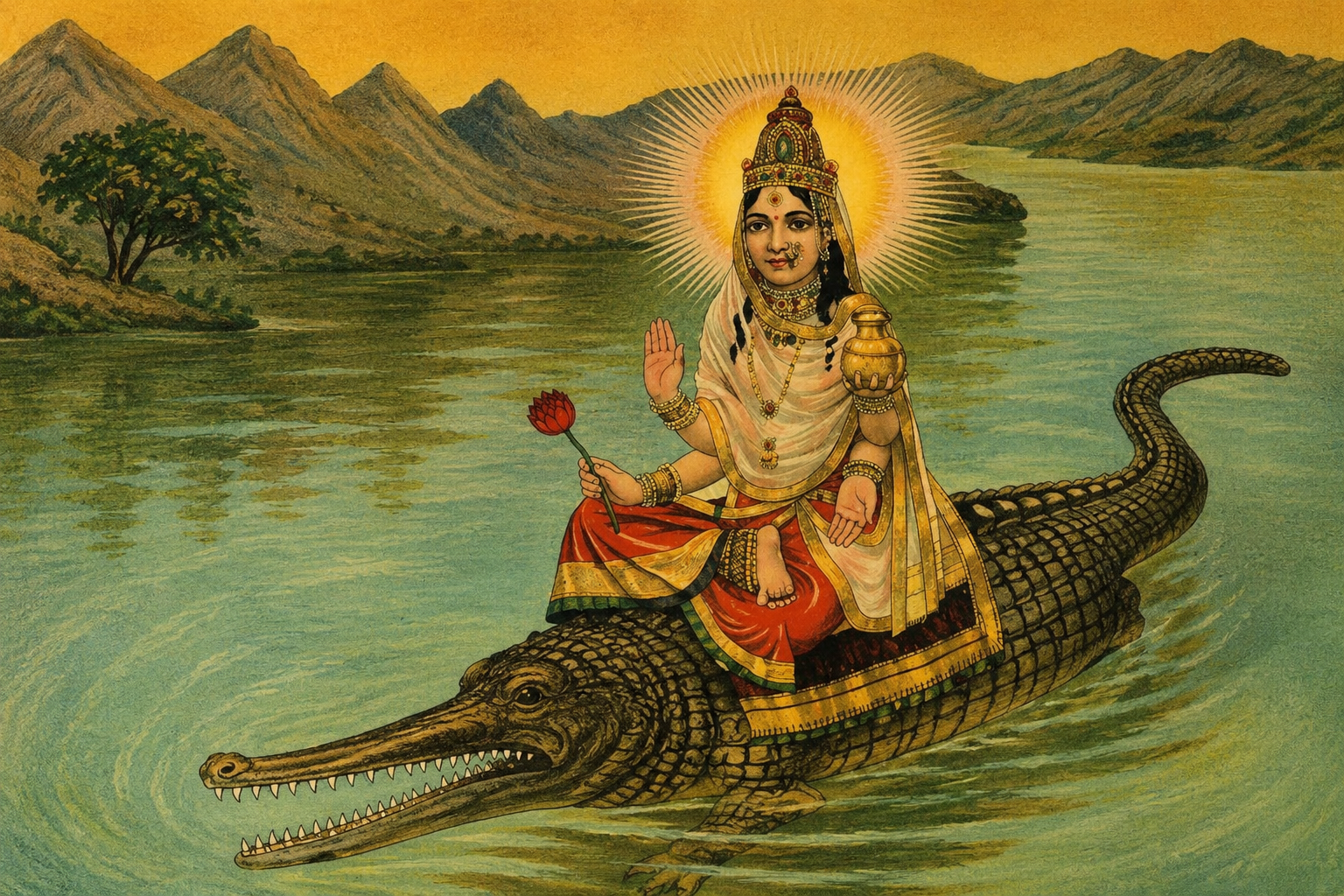
During my back injury I came across the Hindu goddess Akhilandeshwari. One interpretation of her name is “She who is never not broken.”
I’ve found myself thinking about that phrase ever since.
It seems to challenge an assumption I’ve carried for much of my life: that growth and healing should somehow make us more settled, more certain and less vulnerable to life’s disruptions.
The Desire for Permanence
The more I sit with it, the more I wonder whether some of our ideas about healing are quietly shaped by a desire for permanence.
We imagine that if we do enough work on ourselves, eventually we will arrive somewhere. We will become Whole. Complete. Resolved.
Yet when I look at my own life, that isn’t what I see.
What I see are periods of expansion followed by periods of contraction. Times of clarity followed by times of confusion. Moments when life seemed to be coming together, only to be followed by moments when something I thought I knew about myself was quietly falling away.
I see a life shaped less by certainty than by a series of thresholds.
And perhaps that is why this phrase has stayed with me.
“She who is never not broken.”
Something about the way life continually reshapes us. Something about the possibility that we are not broken, but being remade.
What first drew me to Akhilandeshwari was the way she is described by some contemporary teachers. She is not a goddess of having it all together.
Instead, she is a goddess of becoming, of reassembling, of evolving and surrendering. She seems to point towards a different understanding of wholeness—one that is discovered not through perfection, but through life’s continual process of rupture and repair.
For many people, she feels especially alive during those periods when old identities are dying but the new self has not yet fully emerged.
Why She Feels So Relevant
Perhaps this is why she feels so relevant right now.
Not simply because of her mythology, but because she seems to speak directly to experiences that many of us recognise: uncertainty and overwhelm, grief and loss, identity unravelling, discovering that the strategies that once sustained us no longer seem to work, and sensing that an old way of being is ending while the new one has not yet fully emerged.
Not Knowing
We tend to celebrate certainty.
We admire clarity, confidence and decisiveness.
Yet some of the most important periods of our lives are characterised by exactly the opposite.
Not knowing.
Unravelling.
Questioning.
Becoming.
Perhaps this is one of the reasons Akhilandeshwari feels so relevant.
She seems to honour these states rather than pathologise them.
Because so much of modern culture does the opposite.
If you’re uncertain, you’re told to get clarity.
If you’re questioning, you’re told to make a decision.
If you’re overwhelmed, you’re encouraged to get back in control.
If you’re unravelling, you’re told to fix yourself.
If you’re in transition, you’re encouraged to get through it as quickly as possible.
Yet what if these experiences are not evidence that something has gone wrong?
What if they are evidence that something is changing?
What if the very experiences we are quickest to judge, resist or try to escape are sometimes the experiences that are reshaping us most profoundly?
Perhaps not every period of unravelling is a breakdown.
Sometimes it is part of becoming.
Riding the Crocodile
Akhilandeshwari is often depicted riding a crocodile.
I don’t know what the crocodile means in the traditional mythology.
What interests me is what happens when I sit with the image.
The crocodile feels ancient. Primal. Instinctive. Wild. Untamed.
It reminds me of the oldest parts of ourselves. The parts that seek certainty, predictability and control when life begins to shift beneath our feet.
Perhaps that is what makes the image so compelling.
She is not standing apart from these forces.
She is riding them.
The Space Between
Much of my work revolves around these kinds of thresholds.
Whether in leadership, a significant life transition, healing, or simply the growing sense that something new is trying to emerge, the territory often feels surprisingly similar.
Something old is ending.
Something new is trying to emerge.
And we find ourselves in the space between.
The instinct is often to rush through these moments, to find certainty, restore solid ground and get back to normal.
Yet I have come to wonder whether these periods are not interruptions to life at all.
What if they are initiations?
What if the moments we spend most of our lives trying to get through are also the moments that shape us most profoundly?
Being Remade by Life
Perhaps Akhilandeshwari is inviting us into a deeper exploration of what it means to be continually remade by life. Not once, but again and again. Through love and loss. Through endings and beginnings. Through certainty and uncertainty. Through all the experiences that ask us to loosen our grip on who we think we are.
As I sit with her story, I find myself wondering whether maturity has less to do with certainty and more to do with our relationship to uncertainty.
Less to do with arriving.
More to do with becoming.
If this reflection resonated, you might enjoy Begin Where You Are—a Reader’s Guide to my reflections, organised by the questions they explore rather than the order they were written.

View comments
+ Leave a comment